

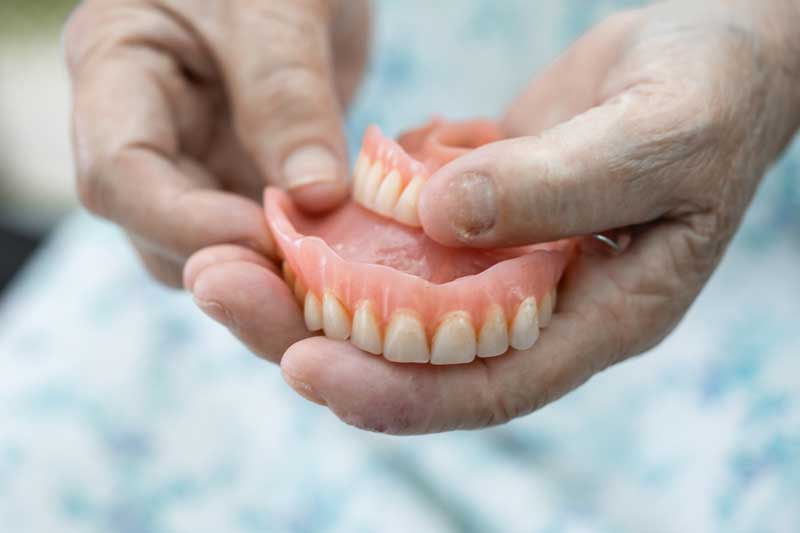
When it comes to replacing missing teeth and restoring your smile, choosing the right kind of denture can make a significant difference to your overall comfort, function, and confidence. Many patients are curious about the different denture options available, and the benefits and limitations of each type.
There’s a lot to consider when starting with a new denture – like deciding between a full or partial denture option, or whether an acrylic or chrome denture is more suitable for you. Understanding the key benefits and differences between each type of denture can help you make a more informed decision, and better support your long-term oral health and overall happiness.
Whether it’s a single missing tooth that needs replacing, or a complete set of upper and lower teeth, a denture can help provide a reliable and natural looking solution to tooth loss.
This article can help you understand the key differences, benefits, and considerations when deciding between full and partial dentures, and the different options available.
What Are Dentures?
Dentures are removable dental appliances that replace some or all of your missing teeth and surrounding tissue. Dentures are designed to restore chewing ability, speech clarity, and facial structure, and improve the overall appearance of your smile. Modern dentures are custom‑crafted using a range of advanced materials to provide a comfortable and natural appearance.
Dentures are a common, simple solution for tooth loss, and are available in different designs and materials depending on each individual’s needs.
Understanding Full Dentures
Full dentures, also called complete dentures, are used when all teeth are missing in an upper or lower jaw, or both. Full dentures replace all teeth in the arch and restore full function and appearance.

When Full Dentures Are Typically Recommended
Full dentures are typically recommended when:
- All natural teeth are missing or cannot be saved
- Bone loss has already occurred
- Patients need full restoration for chewing and speaking
Full dentures replace an entire arch of teeth and rest directly on the gums. In many cases, full dentures rely on suction to stay in place, particularly for the upper jaw. By fitting the surface of the denture to your exact oral structure, the denture is designed to fit snugly against your gums and underlying bone structure in order to hold itself in place.
Benefits of Full Dentures
- Full dentures restore facial support and smile aesthetics
- Full dentures offer complete tooth replacement
- Full dentures can restore chewing ability and speech
Full dentures are custom‑made to fit each patient, and can provide a comfortable, reliable replacement option for a full set of missing teeth.
Understanding Partial Dentures
Partial dentures are ideal for patients who still have some of their natural teeth remaining. A partial denture fills the spaces left by missing teeth, while working alongside the healthy remaining teeth to restore function and appearance.
When Partial Dentures Are Suitable
Patients may need partial dentures when:
- Tooth loss affects only certain areas
- Remaining natural teeth can support a denture
- Preserving natural teeth is a priority
Partial dentures replace only the missing teeth and are supported by existing teeth and gums. Often your remaining natural teeth can be used as anchor points for the denture, helping to retain the denture in place and provide extra stability. Partial dentures often feature a clasp on one or both sides of the denture, which hook around one of your remaining teeth and can easily be removed with gentle pressure. This allows the denture to be put in and taken out easily, while still ensuring it stays fixed firmly into place when needed for eating and talking.
Partial Denture Benefits
Key partial denture benefits include:
- Improving the longevity of your remaining natural teeth, by preventing them from shifting and moving due to continuing bone loss
- Protecting the surrounding soft tissues of your mouth (such as your gums and cheeks)
- Maintaining bite alignment and restoring function when chewing, biting and tearing food
- Improving chewing efficiency
- Improving the appearance of your smile and improving overall confidence
Most often a partial denture typically uses a metal or acrylic framework, which hold the artificial teeth in place. Compared to a full denture, partial dentures often feel more stable due to the added support and stability provided by your remaining natural teeth
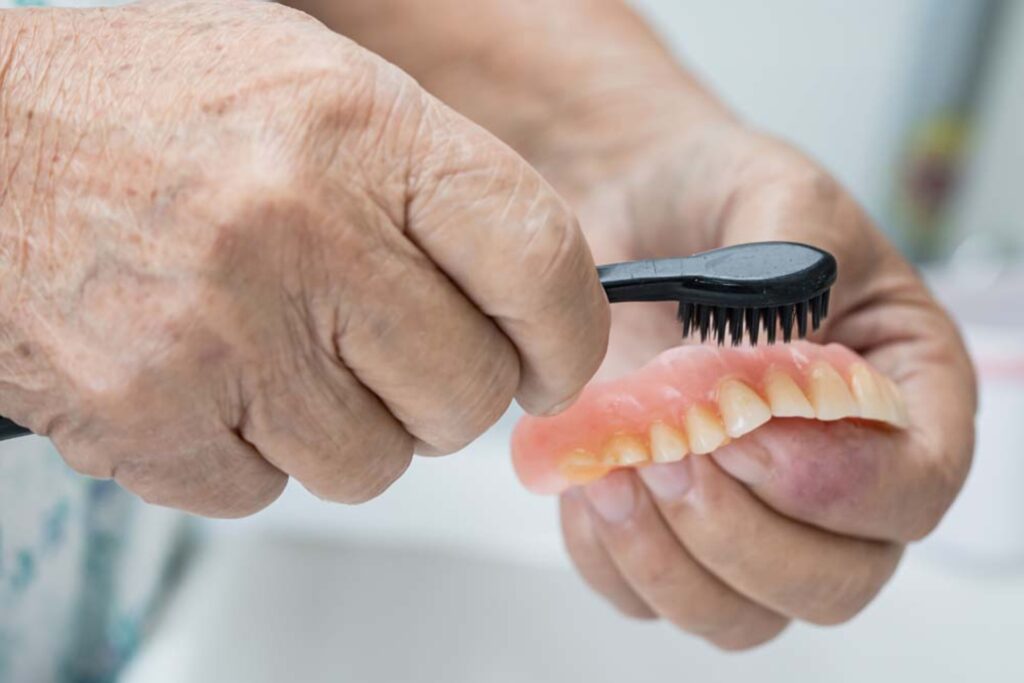
Full Dentures vs Partial Dentures: Key Differences
Understanding the key differences between full and partial dentures can help patients choose the most suitable option for their specific needs.
Key Difference Explained
- Full dentures replace all the teeth in an upper or lower arch.
- Partial dentures replace only some missing teeth.
- Full dentures rest entirely on the gums.
- Partial dentures rely on remaining natural teeth for support.
This comparison highlights the difference between full and partial dentures and how each option functions. If you’re still unsure which option may be right for you, a qualified dentist or dental prosthetist can help you determine the best choice for your needs.
Types of Dentures Available
There are many different types of dentures available, each with their own benefits and limitations. This can include:
- Full dentures
- Partial dentures
- Immediate dentures (made to replace teeth which have not yet been removed, so that the denture can be inserted at the time of extraction)
- Implant retained dentures (fixed to existing dental implants in the jawbone, for added stability)
- Acrylic and chrome dentures
- Modern dentures with advanced materials, such as flexible valplast dentures
Dentures are custom‑made to fit each individual patient, and your prosthetist will take into consideration several different factors when creating a denture to suit you; such as the structure and shape of your gums and soft tissue, heavy or unique bite patterns, and the likelihood of future tooth and bone loss.
Choosing Between Dentures
When deciding between a full or partial denture it’s important to consider a number of different factors, including:
- The number of missing teeth
- The health and longevity of remaining natural teeth
- Jaw structure and gum health
- Comfort preferences and lifestyle.
While it’s important for patients to know and understand the differences between denture types when considering new dentures, deciding between a full or partial denture option should always involve professional guidance from a qualified dentist or dental prosthetist.
What to Expect When Wearing Dentures
For first time denture patients especially, it can take time to adjust to wearing a new denture. Dentures can feel different at first, and the adjustment period will be different for each individual. With patience and proper care, a well-fitting denture will eventually start to feel more normal over time. It’s normal and common for new dentures to require small adjustments in the beginning, in order to achieve a “perfect” fit.
For patients struggling with discomfort while adjusting to the new denture, it may be recommended to remove the dentures at night to allow the gums a chance to rest. However, if you begin to notice ulcers or excessive rubbing caused by the denture, it’s important to seek advice from a professional.
For many patients, dentures are essential for restoring and maintaining confidence and improving overall quality of life. A well-fitting denture provides a reliable, long-term solution to tooth loss, and can make a huge difference to eating, speaking, and appearance.
How The Denture Clinic Can Help
At The Denture Clinic, our dentures are made using quality materials and precise craftsmanship. With over 20 years of experience, our Dental Prosthetists take care to ensure every denture is designed to look natural and feel comfortable.
Part of our commitment to quality care is to ensure all of our patients receive personalised advice when deciding between full dentures, partial options, or other suitable solutions.
Speak With Our Friendly Team
If you need help choosing between full dentures or partial options, our experienced team is here to help.
Tarragindi Denture Clinic is located at Shop 4 / 56 Pring Street, Tarragindi QLD 4121.
You can contact them using the information below:
| Location: | Shop 4 / 56 Pring Street, Tarragindi QLD 4121 |
| Phone: | (07) 3892 7988 |
Beaudesert Denture Clinic is located at 3 Eaglesfield Street, Beaudesert QLD 4285.
You can contact them using the information below:
| Location: | 3 Eaglesfield Street, Beaudesert QLD 4285 |
| Phone: | (07) 5541 2365 |
Jimboomba Denture Clinic is located at Colonial Village Shop 13, 689-695 Cusack Lane Jimboomba QLD 4280.
You can contact them using the information below:
| Location: | Shop 13, 689-695 Cusack Lane, Jimboomba QLD 4280 |
| Phone: | (07) 5548 7768 |
Contact our friendly team to find out more about our full partial denture options, and find the solution that suits your needs.